Friday, 6 January 2017

In Celebration of Outdoor Learning

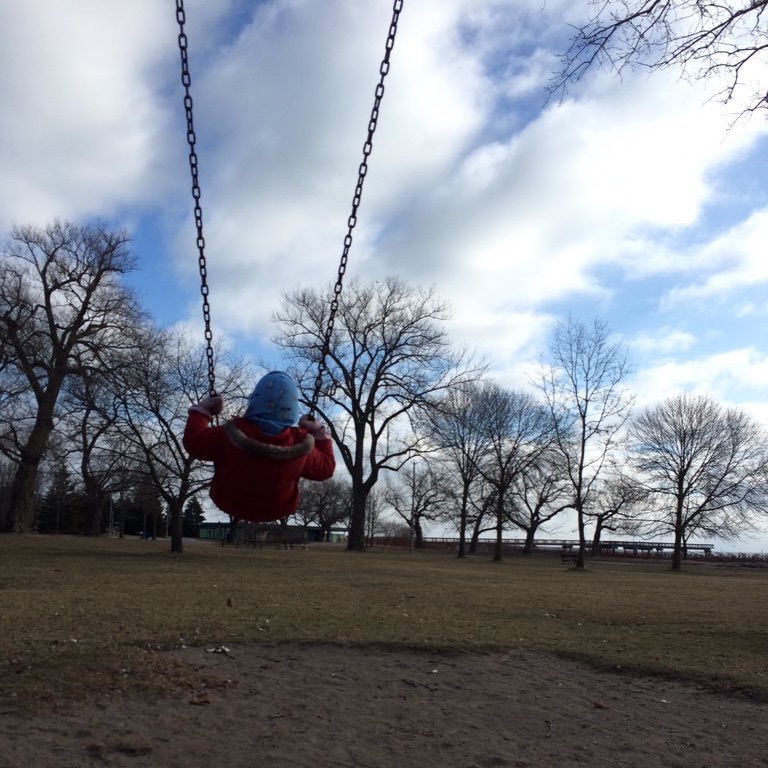
Playing, exploring, and the act of simply being outside provides immeasurable opportunities for rich and meaningful early learning experiences. As an educator, outdoor learning is a huge part of what I try to do - and yes, that does mean year round. As my first blog post of the new year, I wanted to share some photos that I believe capture the spark, joy, and endless possibilities of outdoor learning. Photographing and documenting learning is something we embrace in all areas of our program, but I must say that photographing outdoor learning has become something very special for me. There's something about capturing the smallness of our students juxtaposed with the largeness and vastness of the outdoor space they're exploring that I find endlessly inspiring. What stands out to me in the shots I've selected are the moments of joy, the moments of calm, the moments of solitude, the moments of togetherness, and the moments of belonging that arise naturally in nature. I hope these photos of our outdoor learning spark something in you as well.


It wouldn't be right to blog about outdoor learning and not mention the fact that we have a unique location on Toronto Island that allows for many opportunities to spend time in nature. That being said, I know that the reality for many can mean small outdoor spaces and lots of pavement and concrete. Regardless of your own outdoor learning areas (or lack thereof) I encourage all educators to become advocates for outdoor learning. Countless pieces of research point to an outdoor learning component being a vital part of early learning. With that in mind, I believe that it's on all of us to share this with admin, staff, and families - to encourage a possible re-think of outdoor space, or even to explore for travel to inspiring outdoor spaces. While outdoor learning comes naturally on the Island, I have met many educators across our board who transforming traditional school playgrounds into creative and useful outdoor learning spaces. Just like our students need exposure to letters, numbers, social skills, and independence, we also owe it to them to provide chances for intentional outdoor exploration. As we enter a new calendar year, consider pledging to spending more time outside with your students in 2017. They'll thank you!

"Must we always teach our children with books? Let them look at the mountains and the stars up above. Let them look at the beauty of the waters and the trees and the flowers on earth. They will then begin to think, and to think is the beginning of a real education." 
- David Polis 

Thursday, 8 December 2016

Observing, Planning, and Documenting Through the Four Frames of Learning

This post references the new Ontario Kindergarten Program (2016). If you teach outside of Ontario, or have not seen the document, you can access it online here: https://www.ontario.ca/document/kindergarten-program-2016?_ga=1.99075806.1582268480.1481239149 I believe there is immense value to all educators checking out the document, particularly the comprehensive front matter which I believe gives a great amount of insight into our current educational approach.
_______________________


With a whole new Ontario Kindergarten Program in 2016 comes new opportunities to consider how we might observe, document, track, assess, and plan learning through the new lenses of the Four Frames of Learning. For many, changes may feel scary – but when employing an asset-based lens (as I try to do!), these changes can, and should be, seen as chances to grow and strengthen our practice. Coming into this year with new (and honestly, amazing!) Kindergarten Program hot off the presses, I was very excited to see how our practice would evolve. In a series of conversations with my teaching partner, we agreed that for a while things may feel “unknown” as we delve into the new document – and that was ok. We were adamant that we did not want to slap down a pre-existing method of planning/observing, and especially did not want to do things how we did it with the old Curriculum Document – as that did not honour this exciting opportunity to look closely at our practices and ensure they are aligned with the new document. Going into it somewhat blind felt tricky, but I am thankful to have a partner who is not afraid to just jump in and see where it takes us!

So, where did we begin? At the front of our classroom space, we decided to put up a series of four corkboards, each one devoted to one of the Four Frames. We planned to use this space for keeping track of things that were done or said during play that may reveal an interest or future direction for learning. The idea was that we would both use sticky notes to jot down things that occurred during the day, link it to an expectation from the program document (which we had beside the board) and then stick it on the corkboard for the corresponding Frame. These observations can then be used to inform future plans.


Our observation board in September
As for planning, we decided to use an updated version of our last year’s planning sheet. Last year we designed a planning sheet that had a small section for each Learning Space in our room. This year, we added a small box in each space to indicate which Frame was being focused on in that area. At first, we considered completely re-designing our planning sheet to plan entirely through the Four Frames, but after some consideration we decided to stick with planning for each specific Learning Space, at least for now. By continuing to plan by each Learning Space would hopefully ensure that no Learning Spaces “fell through the cracks”.  What led to that decision was the idea that we could use this year as a sort of research into which Learning Spaces in Kindergarten lend themselves well to the Four Frames (and if there are any that do not). I am a big believer in the approach of “don’t just do things because they’ve always been done that way”. We wanted to be able to look back at our planning sheets at the end of the year to investigate which Spaces make sense to keep in the room based off their links to the Four Frames, and which just seem to be there “because they always have been”. It's important to look critically at how we set up our classrooms as we consider the philosophies attached to the 2016 document. Our current planning sheet was seen as sort of a bridge from the old practice to the new.

Our planning sheet, with spaces for Four Frames added
For displaying our learning, I was really struck by the concept of “noticing and naming” the learning in play, as referenced in the new document. As advocates for play-based learning, my partner and I already did it, but we wanted to encourage other staff members, families, and the students themselves take part in the process of seeing the learning that happens naturally in play! We printed out a variety of photos we snapped of play so far this year, and invited multiple voices to use sticky notes to share what learning they saw present. Looking at documentation with multiple lenses is something we try to do as much as we can, as it brings a lot of new perspectives on play and learning to the surface.

Our Noticing and Naming Learning Board

Invitation to Notice and Name Learning in Play

Along with trying new things and not just sticking to how they used to be done, my partner and I agreed that we wanted to be critical along the way about what new practices were working and what were not. Part of embracing the new document whole-heartedly may mean trial and error, and I think it’s totally alright (and crucial!) for educators to talk about what may not have gone right the first time, and to re-tool approaches when needed. Upon reflection, we felt the planning sheets were working and the notice and naming the learning board was well received. However, it became apparent to us both that our new observing plan (the four cork boards) wasn’t entirely working – yet! We allowed ourselves the freedom and safety to identify that our plan needed some work…learning is a journey after all!

A journey, which has now led us here…


"What's Happening in Room 109?: The Four Frames of Learning"


Proudly presenting...our method to observe, plan and document learning through the lens of the Four Frames!

Based off our experience so far investigating the act of observing, planning, and documenting learning using the Four Frames, we created this display outside our room. I will now share a bit of the thinking that went into it.


By desire, we tend to break things into sections. With that in mind, it was my initial instinct to separate the Frames and sort observations into each one. I think this speaks to our old Program document, which separated curricular outcomes into distinct subjects (Language, The Arts, Science, Math, etc.). However, the more familiar I get with the new document, and the more experience I have putting into action, the more I understand about the overlapping nature of the Four Frames. What I found difficult about the trying to sort observations into the Four Frames was that many expectations fall within two or three of the Frames (and this is a great thing!). I was left standing there with my sticky note wondering which board to put it on, given that what I observed may demonstrate Belonging & Contributing AND Problem Solving & Innovation. Personally, I love that the new outcomes overlap, as it really honours the complexity of learning and how many interactions through play can (and do!) involve multiple Frames. The overlap of the curricular pieces is a strength of this document, and it became apparent that our original plan to separate and sort observations into each Frame needed some re-thinking.

This led to the idea of a four part Venn diagram, which would feature each Frame but honour the great deal of overlap that exists in the learning we were noticing. 

Close up section of display
On the Venn Diagram we wanted to use our original sticky note observations, but thought about ways to include a more diverse sample of play and learning. I thought back to the "doing, saying, and representing" triangle I had seen so much in Professional Development sessions lately, and realized we could do a better job with featuring all three ways learning is demonstrated in play. We printed out photos (we use iPads to document with photos daily) but also wrote down snippets of conversations we've heard this year, and included actual work samples as well. I felt that this approach allowed for more learning to be featured in the Venn Diagram - and we had already collected this data already anyway, this was just a new way to display it. I love this triangle and am continuing to work towards ensuring a more even distribution between these three important factors.


Another piece that we found difficult with our original plan was one that we hear about a lot – TIME! We noticed that often our “Educator Goals” section on our weekly plan was filled with “add more sticky notes to the observation board!”. Needless to say, we were observing, but we didn’t always find the time to write it down and sort it into a Frame. With the planning, documenting, and displaying of learning – along with the actual play and learning piece! - we were doing, there never seemed to enough hours in the day, and our actual "write down observations" piece often fell to the wayside. 


It was a combination of two things that led to my own personal “a-ha moment” in how to help the writing of observation process fit more naturally into our day. One was digging into the front matter of the new Program document, and the other was during a rich conversation on documentation at a Pedagogical Leadership with the Ministry of Education that my partner and I were invited to. I thought about the noticing and naming piece, and wondered why the documentation was happening separate from the observations. When shifting towards a Pedagogical Documentation stance, which

I’ve been thinking a lot about lately, it suddenly clicked that the observing, noticing and naming, and planning pieces all fit together as one. Documentation isn’t just for the end point, it’s to capture what learning is present in play and to analyze and utilize that information to extend future learning. Of course we had no time for all the pieces…we were trying to do them all separately. By creating this large diagram on our display board and treating it as a living, breathing, evolving piece of Pedagogical Documentation, we were able to streamline our time and involve all these important tasks together. This honours the cyclical nature of Pedagogical Documentation and was a natural way to examine how the planning, observation, and documentation processes are intertwined, not separate.


Part of our display
Is this the perfect solution? No, it’s simply what works for us, right now at this time, at our current place on our learning journey. All educators will discover what works for them, but it’s my hope that at least some of this inspires your own thinking about what observing, planning, and documenting may possibly look like in our Kindergarten classrooms using our new Program document. If I could give any suggestions, I would say allow yourself the chance to try things, reflect on what didn’t work, and then try again! Given that it’s a new Program, nobody should have it figured out in a snap. Instead, like we do with our students, it’s through hands-on exploration with the new document that we will deepen our understanding of how our practices can and should adapt. We will continue to add, remove, and update the photos, quotes, observations, and work samples contained in this large graph and utilize that information in noticing, naming, and planning for further learning. It's been an exciting experience to watch how much our own practice has changed as we get to know more about more about the 2016 Kindergarten Program. It's an incredible document that I feel honoured to teach! In the comments below, I would love to hear how you are approaching observing, planning, and documenting in your own practice through the lens of the Four Frames, as well as any "a-ha" moments you have had this year. As I've said many times this year, it's such an exciting time to be teaching Kindergarten in Ontario!

Tuesday, 16 August 2016

A Shared Vision: Positive Partnerships for Kindergarten Educators

The following post was created in conjunction with my teaching partner, Shelagh Saunders. Over the last school year we had the opportunity to facilitate workshops and presentations about our approach to teaching. So often, the topic of our own partnership was the main focus of questions we received from educators in the field. It certainly is a big topic, as a partnership can often make or break the experience. With this in mind, we prepared the following post that details our approach and beliefs regarding working as co-educators in a Kindergarten classroom.

___________

“The most valuable resource that all teachers have is each other. Without collaboration our growth is limited to our own perspectives.” – Robert John Meehan

A Kindergarten classroom, by nature, is a very busy place. In our classrooms we encounter curious and capable students who come to us with a wide variety of unique needs, interests, and personalities. As these students explore the classroom environment, they engage in intentional play and inquiry spurred by their interests. Their learning presents itself throughout the room in a variety of forms, which can then by captured and documented by educators and students alike. On any given day, in any given classroom, students are engaged in whole group, small group, and individualized learning. Along with facilitating and provoking this learning, educators also communicate with parents and families, document, assess, plan, implement, extend learning and provide a loving and safe environment for the students to thrive in. Given the magnitude of the aforementioned responsibilities, the need to function as a team of educators presents itself as crucial. Yes, Kindergarten is a busy place, but ensuring that both educators in the room are working together with a common goal in mind is a way to ensure that all areas of our program are being met. Nobody can do it alone.

This partnership can feel challenging at times and potentially be a roadblock to fully implementing a successful program. For us, we strongly believe that a Full Day Kindergarten program is strengthened by the fact that we have multiple educators in the room. Shifting towards this belief with an asset-based perspective at the core of what we do has helped us implement a program that allows each of us to share our vision for a learning community. Teaching as a team allows us to utilize each other’s knowledge, skills, and strengths and provides students with a program that is reflective of multiple philosophes and points of view. Even when we have differing views (and yes, it sometimes does happen!), we choose to look at these moments as chances to grow, learn, and broaden our own individual perspectives. If we present ourselves as a united team, we are more likely to be viewed that way by students, families, and co-workers.

We’ve identified four main aspects of our approach to team-teaching that we believe have been instrumental in establishing an ongoing positive working relationship:

-       Communication
-       Respect
-       Flexibilty/Trust
-       Sense of Humour

(Click image to enlarge)

Beyond our overarching philosophy on partnership, we’ve also identified some specific ways we’ve worked to establish a productive and positive working relationship:

n  treat partner with courtesy and kindness
n  encourage partner to express ideas and opinions
n  listen to what each other has to say before expressing your viewpoint
n  share each other’s strengths and use them in action
n  make time to get to know each other
n  share responsibilities 
n  consider your use of language (i.e. what message is being sent if partners are referred to as “assistants”? On the contrary, what message is being sent if we refer to ourselves as “co-educators”? Is it important to distinguish who is the ECE and who is the OCT, or can a common title be used?)

The critical importance of working as a team is explicitly referenced in The Kindergarten Program (2016, Ontario), which states:

(page 112)

      Approaching the monumental task of being a Kindergarten educator through the concept of maximizing the team approach and honouring each other’s unique knowledge and experience allows us to cover more bases in our classroom community. However, we know relationships can be tough. We ourselves have had moments of disagreement (as is normal in any partnership), but by maintaining communication, respect, flexibility, trust, and a sense of humour – we have been able to ensure that these potential obstacles became learning opportunities.


A word from Shelagh: From the start we sat down together and shared our strengths with each other. This allowed us to highlight our own areas for growth and where we could compliment each other in providing a well-rounded and rich Kindergarten program. We’ve worked hard to remove any pre-conceived notions of “who’s in charge” and that’s allowed us to come together and look at ourselves as partners who are open-minded about the skill sets and voice we each bring to the table. It’s a compliment when another educator comes into the room and they can’t distinguish between the OCT and the ECE because that to me is saying that we are truly a partnership.

A word from Joel: When partnership feels like a struggle, it’s so important to remember that being in a partnership simply makes your day easier! From sharing a story or a laugh, to sharing the task of setting up play based learning centres, this is a journey we share. Not only does working as a team lessen our individual loads with regards to facilitation, but it also honours the wealth of knowledge in childhood development that ECEs bring to the table. Our partners are not “assistants”. They are individuals who bring their own skills, knowledge, and passion to the classroom to enrich learning. Not only can students learn from them, but so can we.